Learning Systems Design · Team Skill Readiness
TeamReady
In DevelopmentFrom Training Completion to Team Readiness.
- Project Type
- Learning Systems Design · Manager Dashboard Prototype
- My Role
- Learning Experience Design · Workflow Analysis · UX Design · Product Concept Design
- Design & Development
- Figma · AI-Assisted Prototyping & Development
- Primary User
- Manager · Product & Design Team
- Status
- In Development
- Measurement
- Proposed Skill Readiness & Evidence Framework
An interactive manager dashboard concept designed to help leaders monitor role-specific skill readiness, identify development needs, and connect employees with targeted learning support.
01The Challenge
Training Completion Doesn't Equal Skill Readiness
Traditional learning dashboards help managers monitor training assignments, completions, and compliance requirements.
But completing training does not necessarily demonstrate that an employee can apply a required skill in their role.
Managers also need to understand which skills are expected, what evidence is available, where development may be needed, and how to provide relevant support.
- Training Completion
- Has an employee completed the assigned learning?
- Skill Readiness
- What evidence indicates that an employee can apply the skills required for their role?
02The Opportunity
Turning Learning Information Into Meaningful Support
“How might we help managers identify role-specific skill development needs and connect employees with relevant support?”
TeamReady explores how learning systems could bring role expectations, available skill evidence, development activities, and manager follow-up into one coordinated experience.
03The Solution
A Manager's View of Team Readiness

Primary Persona · Manager Experience
Meet Evana
Evana Perez · Director of Product Design
Evana leads a cross-functional team of 10 employees across Product Design, UX Design, Product Management, and Data Analytics.
As a manager, she needs visibility into the role-specific skills her team members are developing, the evidence supporting their readiness, and areas where additional guidance may be needed.
TeamReady helps her explore those needs and connect skill-readiness insights to practical development actions.
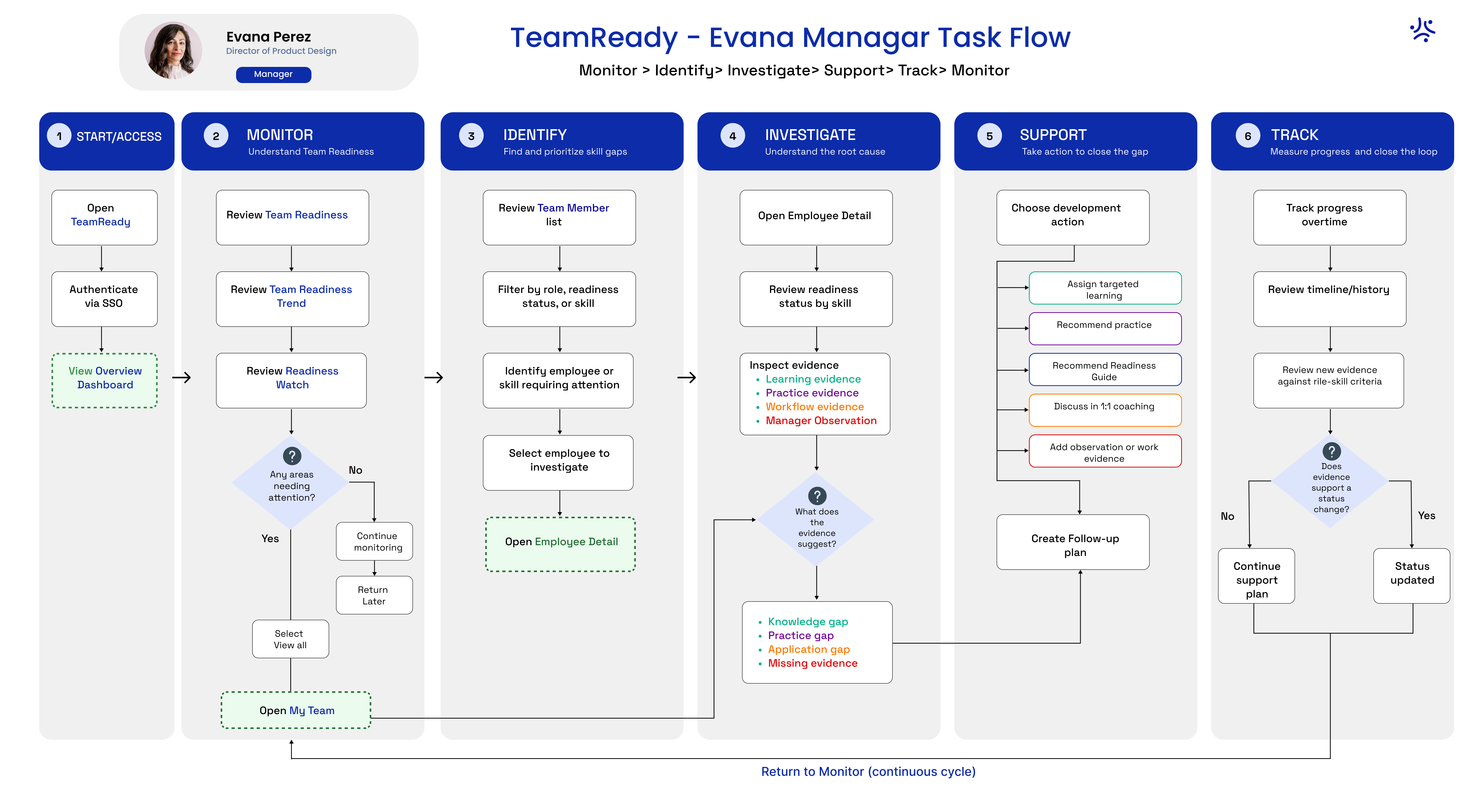
01 · Monitor
Review overall team readiness, skill development trends, and areas requiring attention.
02 · Identify
Notice employees or role-specific skills that may require additional review.
03 · Investigate
Examine supporting evidence and understand the context behind a readiness indicator.
04 · Support
Recommend relevant development resources, discuss next steps, or add an item to an upcoming 1:1.
05 · Track
Document agreed actions and review progress over time.
06 · Monitor
Return to the team overview to reassess development needs as new evidence becomes available.
Manager Workflow
Manager Task Flow
This flow maps how Evana uses TeamReady to monitor team readiness, identify skill gaps, investigate supporting evidence, take action, and track progress over time. It reflects the core manager workflow that guided the structure of the prototype.
Platform Structure
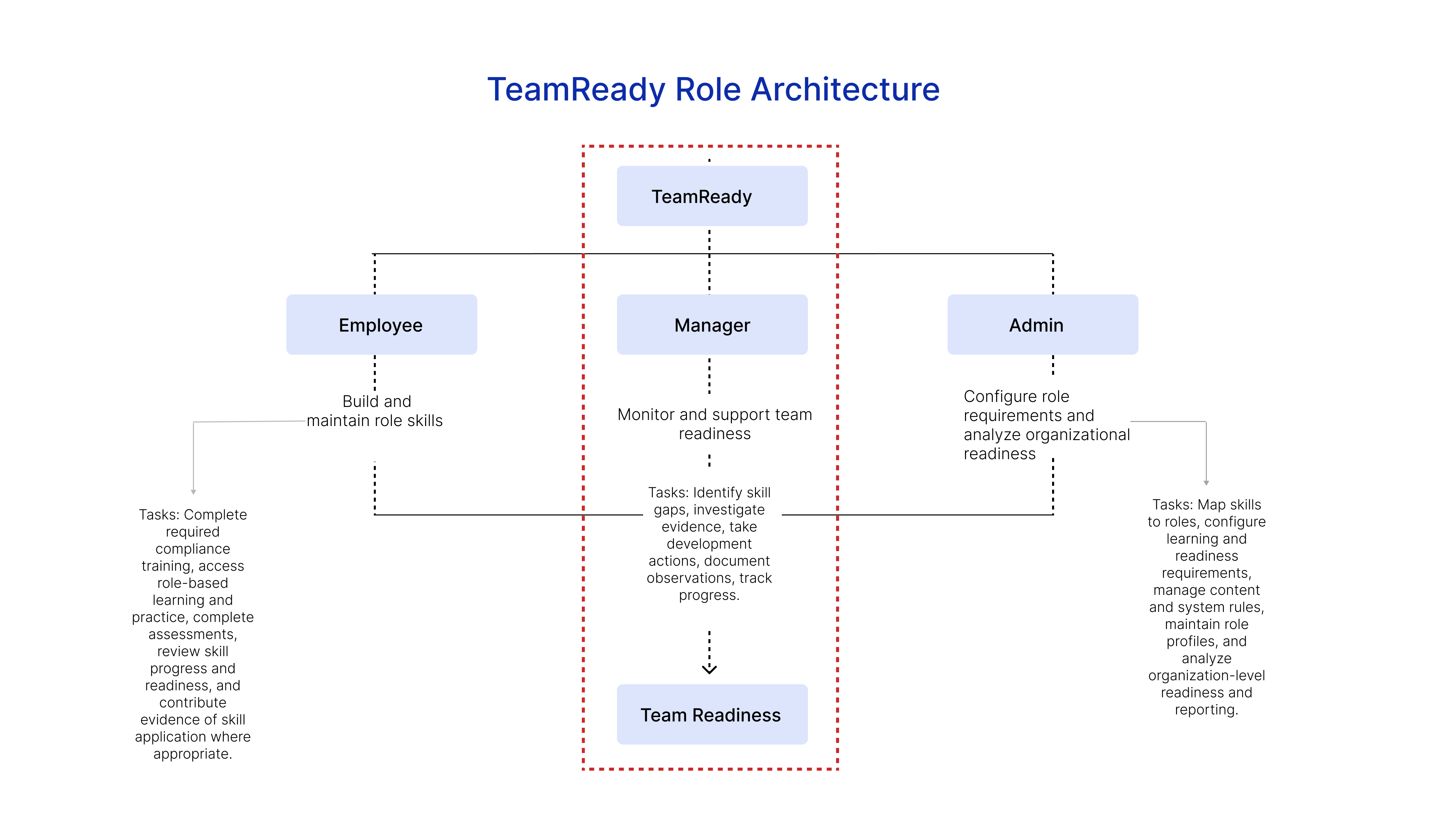
Role Architecture
TeamReady is designed as a role-based platform with experiences for Employee, Manager, and Admin. While the full concept supports multiple roles, this case study focuses specifically on the manager experience and how managers use readiness signals to support employee development.
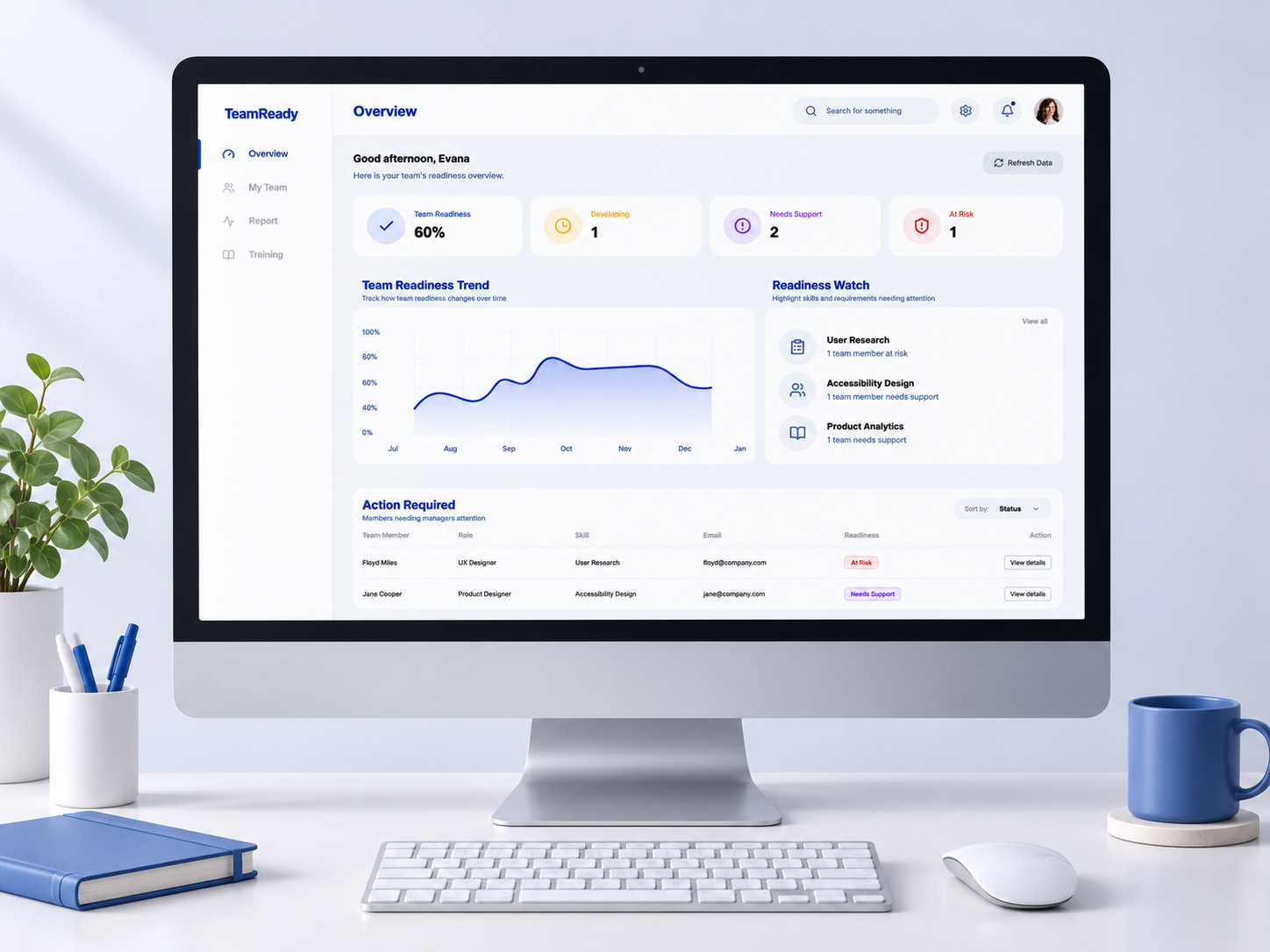
The Dashboard Experience
The manager experience is organized around three primary screen areas.
01 · Overview
Team readiness summary, training trends, Skill Watch, Action Required, and Compliance Watch.
02 · My Team
Employee-level readiness indicators and access to individual details.
03 · Employee Details
Role Skills, Evidence, Development & Support, and Development Timeline.
The current prototype demonstrates the manager experience. Not every proposed feature is fully implemented, and the persona and team information are fictional.
04Key Design Decisions
Designing Readiness Around Roles, Evidence, and Action
- 01
Define readiness by role
Readiness is evaluated in relation to the skills expected for an employee's role rather than through one generalized score applied equally across all employees.
- 02
Look beyond completion
Training records provide useful context, but stronger readiness conclusions require evidence of skill application, quality, and consistency.
- 03
Design for investigation
Readiness indicators help managers identify areas to explore. Employee details provide additional context before development decisions are made.
- 04
Connect insights to support
Manager actions, development notes, and targeted learning resources help connect identified needs with practical next steps.
05System Architecture
A Role-Based Learning System
TeamReady is envisioned as a broader platform with three distinct experiences.
Learner / Employee
Access assigned learning, role-specific development resources, and practical guidance.
Manager
Review team readiness, investigate skill evidence, recommend support, and track development.
Focus of this case study
Admin
Manage learning assignments, role-skill structures, and administrative reporting.
From Identifying a Skill Need to Applying Support
The Readiness Guide explores a related employee-facing experience within the broader TeamReady concept.
For example, after identifying a development opportunity involving accessibility design, a manager could recommend practical guidance that helps a UX Designer apply accessibility considerations during a real work task.
This is a conceptual relationship. The two standalone prototypes are not connected, and no data is exchanged between them.
06Proposed Evaluation Frame
A Proposed Skill Readiness & Evidence Framework
This is a proposed evaluation approach. Evidence would be gathered across three areas, moving from how managers use the dashboard toward documented development follow-through.
Manager Use
- Overview and My Team review activity
- Employee detail investigation
- Support actions and 1:1 items created
- Clarity of readiness indicators
Skill Evidence
- Defined skill expectations for each role
- Evidence of skill application
- Quality and consistency of that evidence
- Manager or reviewer feedback
Development Follow-Through
- Documented development actions
- Use of recommended learning resources
- Progress shown on the development timeline
- Changes in evidence over time
Proposed evaluation approach. No production readiness outcomes have been measured.
TeamReady is in development. The manager persona, team, and scenario are fictional.